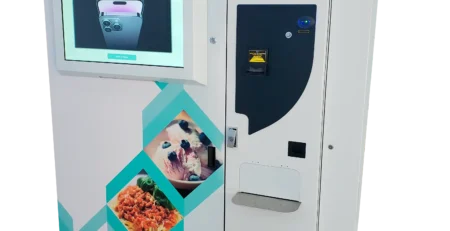


How the Food Supply Chain Works for Hot Food Vending
When most people think about a hot food vending machine, they focus on the machine itself: the touchscreen, the heating technology, the interface. But the machine is only half the story. The food inside it travels a complex and carefully managed supply chain before it arrives, sealed and ready to heat, in the vending column.
Understanding this journey is not just an academic exercise. For vending operators, procurement managers, and facility directors, grasping how packaged meals are produced, certified, transported, and stored is the difference between a profitable, reliable vending service and one plagued by waste, complaints, and compliance risk.
This guide walks through the entire food supply chain as it applies to hot food vending, from the production facility to the final heated bite. We look at who the key actors are, what processes they follow, how cold chain integrity is maintained, what regulations govern the sector, and how operators can make smarter procurement decisions based on this knowledge.
| Why this matters
Italy and Northern Europe are the most developed markets for hot food vending in the world. Yet the majority of operators still select food suppliers based primarily on price, without evaluating supply chain quality, certification depth, or cold chain reliability. This guide gives you the framework to ask better questions and build better partnerships. |
1. The Packaged Meal Industry: Who Makes the Food in Your Machine
The food that goes into hot vending machines is produced by a specific segment of the food industry: ready meal manufacturers, sometimes called convenience food producers or ambient/chilled food specialists. This sector operates very differently from foodservice or retail grocery production.
1.1 The Three Main Producer Types
Not all food producers are equal, and understanding the distinction matters for operators. There are broadly three categories supplying the vending channel:
- Large-scale industrial producers: Companies manufacturing millions of units per year, often supplying supermarkets, airlines, and institutional catering as well as vending. They offer scale and pricing advantages, but frequently lack vending-specific expertise and may not offer formats optimized for machine dimensions or heating profiles.
- Vending-specialist food companies: A smaller but growing category of producers that develop products specifically for vending machines. They understand portion sizing, packaging rigidity, heating uniformity, and the visual presentation requirements of a machine display. These are often the preferred partners for serious operators.
- Regional artisan producers: Smaller companies, particularly in Italy, producing higher-quality fresh or chilled products for local vending circuits. They offer product differentiation and quality, but require more complex logistics and shorter shelf-life management.
1.2 Key Italian Producers in the Vending Food Segment
Italy has a particularly rich ecosystem of ready meal producers active in the vending sector. Several companies have developed dedicated vending lines over the past decade, producing pasta dishes, risottos, soups, and protein-based meals in vending-compatible formats. The northern regions, particularly Lombardy, Emilia-Romagna, and Veneto, are home to the highest concentration of these producers, partly driven by the density of industrial districts and the consequent demand for workplace food solutions.
The most sophisticated Italian producers now offer operators co-branded or private-label programs, allowing a vending company to present its own brand on the packaging while relying on the producer’s manufacturing infrastructure. This model is growing in popularity as operators look to differentiate their services.
2. Product Development: Designing Food for a Machine
Not every food product can go into a vending machine. Before a meal reaches an operator’s catalogue, it must go through a product development process that accounts for the machine’s specific technical requirements. This is one of the most underappreciated aspects of the food vending supply chain.
2.1 Formulation for Heating Performance
The central challenge of vending food development is this: the product must taste good after being heated by a machine that does not know who the user is, how long they will leave it in, or whether it has been in the machine for one day or twenty. Formulation must account for all these variables.
Products are typically tested across a heating matrix that simulates different temperature settings, humidity levels, and heating durations. Starches, proteins, and fats all behave differently under moist heat versus dry heat. A pasta product that heats well in a steam-injection machine may develop a rubbery texture in a convection model. Producers supplying multiple machine types must develop and validate separate heating protocols for each.
The water activity of the product, a measure of available moisture, is a critical formulation parameter. Too low, and the product dries out during heating. Too high, and it becomes a food safety concern at ambient temperatures. Balancing water activity against texture and food safety is one of the core technical competencies of a qualified vending food producer.
2.2 Packaging Design Constraints
The packaging for vending food products must satisfy multiple simultaneous requirements that often pull in different directions:
- Machine compatibility: The package must fit within the vending column dimensions (typically standardized at 290x200mm for European machines, though proprietary formats exist), dispense cleanly without jamming, and withstand the mechanical forces of the delivery system.
- Heating performance: The packaging material must be microwave-safe or oven-compatible depending on machine type, must vent appropriately to prevent pressure buildup, and must not warp or collapse during heating in a way that makes extraction difficult.
- Visual appeal: The product must look attractive in the machine display window, where lighting and angles may be unflattering. Packaging design must account for this display context.
- Labelling compliance: EU Regulation 1169/2011 requires specific information on all food packaging: allergens, nutritional values, ingredients, country of origin, storage conditions, and use-by date. Space constraints on vending packaging make compliant labelling a design challenge.
- Shelf life optimization: Packaging technology, including modified atmosphere packaging and high-barrier films, must extend shelf life to commercially useful levels without compromising taste or nutritional quality.
| Packaging Parameter | Typical Requirement | Why It Matters |
| Column width compatibility | Max 290mm (standard EU) | Machine dispensing reliability |
| Heating format | Microwave-safe or dual-oven | Determined by machine heating technology |
| Shelf life (ambient) | 60–180 days | Operator stock management |
| Shelf life (chilled) | 14–28 days | Requires refrigerated machine |
| Allergen labelling | EU 1169/2011 compliant | Legal requirement |
| Minimum font size (labels) | 1.2mm x-height | EU regulation minimum |
3. Food Safety Certification: The Compliance Framework
The food industry is one of the most heavily regulated sectors in Europe, and packaged meals for vending are no exception. Operators sourcing food products need to understand the certification landscape to evaluate supplier credibility and manage their own compliance obligations.
3.1 HACCP: The Foundation of Food Safety
Hazard Analysis and Critical Control Points, universally known as HACCP, is the mandatory food safety management system required across the EU under Regulation (EC) 852/2004. Every food business operator in the supply chain, including vending operators, must implement HACCP principles.
For producers, HACCP means identifying every point in the production process where a biological, chemical, or physical hazard could be introduced, determining which of those points are critical control points, establishing monitoring systems, and maintaining documentation. For vending operators, the HACCP obligation extends to machine hygiene, loading procedures, and temperature monitoring.
3.2 IFS Food and BRC Global Standards
Above the mandatory HACCP baseline, leading producers pursue voluntary third-party certifications that provide independent assurance of their food safety management systems. The two dominant standards in Europe are:
- IFS Food (International Featured Standards Food): Widely used in France, Germany, and Italy, IFS Food certification involves a comprehensive audit of the producer’s facility, processes, documentation, and food safety culture. IFS has a tiered scoring system, and the grade achieved is publicly visible. Operators should look for IFS Food Higher Level certification as a minimum for their primary suppliers.
- BRCGS Food Safety (formerly BRC Global Standard): The dominant standard in the UK and increasingly used across Europe. BRCGS audits are similarly rigorous and cover product safety, quality, and legality. BRCGS Grade A or AA is the benchmark for premium suppliers.
Both IFS and BRCGS require annual audits by accredited certification bodies and maintain public databases where certificates can be verified. Operators should verify certificates directly rather than accepting producer claims at face value.
3.3 Additional Certifications Worth Evaluating
Depending on the operator’s customer base and the products being sourced, additional certifications may be relevant:
- ISO 22000: An international standard for food safety management systems, compatible with HACCP principles. Less granular than IFS or BRCGS but recognized globally.
- Organic certification (EU Regulation 2018/848): Required for any product marketed as organic. If operators are sourcing organic products to meet growing demand from health-conscious users, they must verify that the producer holds a valid organic certificate from an accredited control body.
- Halal and Kosher certifications: Relevant for operators serving diverse workforces. These certifications involve both ingredient sourcing and production process requirements.
- Specific allergen-management certifications: Some producers pursue certifications related to free-from claims (gluten-free, nut-free), which require segregated production lines and documented protocols.
| Operator checklist
Before signing with a food supplier, request: (1) current IFS or BRCGS certificate with grade, (2) most recent audit report summary, (3) their product recall procedure, (4) allergen management policy, and (5) confirmation of HACCP documentation for vending-specific distribution and storage conditions. |
4. Cold Chain Management: Keeping Food Safe from Factory to Machine
Cold chain integrity is arguably the most operationally demanding aspect of the food vending supply chain. Unlike ambient products, which can be stored and transported at room temperature, chilled and frozen ready meals require continuous temperature control from the moment they leave the production line until they are consumed.
4.1 The Cold Chain Defined
The cold chain is the unbroken sequence of refrigerated storage and transport that maintains perishable food products within a specified temperature range. For chilled ready meals, the standard EU requirement is storage and transport at or below 4°C. For frozen products, the standard is -18°C or below.
Any break in the cold chain, even a brief one, creates conditions for microbial growth and accelerates product degradation. A chilled pasta product that spends two hours at ambient temperature during a delivery handover may remain safe to eat, but its shelf life is shortened, its texture may be compromised, and the producer’s liability may be affected.
4.2 Cold Chain Actors and Their Responsibilities
The cold chain for vending food typically involves multiple parties, each with specific responsibilities:
- Producer: Responsible for chilling or freezing the product immediately after production, maintaining cold storage at the facility, and ensuring that products are loaded onto refrigerated vehicles at the correct temperature.
- Primary logistics provider: The specialist food logistics company responsible for transport from production facility to regional distribution hub. Must operate vehicles with real-time temperature logging and compartmentalization for different temperature zones.
- Regional distributor or wholesaler: In many vending circuits, a regional distributor performs break-bulk and consolidation, receiving products from multiple producers and repackaging for operator delivery routes. This stage introduces additional cold chain risks if the distributor’s warehouse is not properly managed.
- Vending operator: Responsible for the final mile, from warehouse to machine. The operator’s own vehicles must be refrigerated or insulated for chilled products, and loading/unloading procedures must minimize temperature excursions. Once product is loaded into the machine, the machine’s refrigeration system takes over.
4.3 Temperature Monitoring Technologies
Modern cold chain management relies heavily on data logging technologies that record and transmit temperature throughout the journey. For operators evaluating suppliers, the quality of temperature monitoring is a key differentiator:
- Continuous data loggers: Electronic devices placed inside shipments that record temperature at set intervals. Data can be downloaded and analyzed after delivery.
- Real-time telematics: Vehicle-mounted or cargo-mounted sensors that transmit temperature data continuously. Allows logistics operators and customers to monitor conditions remotely and intervene if a deviation occurs.
- Smart packaging indicators: Low-cost time-temperature indicators that change color or display when a product has been exposed to temperature abuse. These are applied at the package level and provide visible evidence of cold chain integrity to operators loading machines.
| Cold Chain Stage | Temperature Requirement | Key Risk |
| Production cold store | ≤4°C (chilled) / ≤-18°C (frozen) | Overcrowding, door cycles |
| Primary transport | ≤4°C (chilled) | Vehicle breakdown, loading delays |
| Regional warehouse | ≤4°C (chilled) | Receiving procedures, mixed loads |
| Operator vehicle | ≤4°C or insulated | Short routes, warm ambient loading |
| Vending machine | ≤4°C (refrigerated unit) | Power outage, door seal failure |
5. Shelf Life Management: The Operator’s Margin
Shelf life is the commercial heartbeat of vending food operations. Too short, and waste eats into margins. Too long, and product quality suffers, or consumers distrust the food. Getting shelf life management right requires understanding how it is determined and how it interacts with every stage of the supply chain.
5.1 How Shelf Life Is Determined
Shelf life for packaged food products is determined by the producer through a combination of microbiological testing, sensory evaluation, and challenge testing. Regulatory requirements under EU Regulation 1169/2011 distinguish between two types of date marking:
- Use-by date: Used for microbiologically sensitive products where consumption after the stated date poses a safety risk. Most chilled ready meals use use-by dates. Vending operators must never sell products past this date, and machines should ideally have automated date-checking capabilities or clear operator protocols.
- Best-before date: Used for products where quality rather than safety deteriorates over time. Ambient products, such as pasteurized or sterilized meals, typically use best-before dates. Consumption after this date is not illegal but the producer no longer guarantees quality.
5.2 Extending Shelf Life Without Compromising Quality
Producers use a range of technologies to extend commercial shelf life while maintaining product quality and consumer safety:
- Modified atmosphere packaging (MAP): The air inside the package is replaced with a controlled mixture of gases, typically nitrogen and carbon dioxide, that inhibits microbial growth and oxidation. MAP is widely used for chilled pasta and protein products in vending.
- High-pressure processing (HPP): A non-thermal pasteurization technology that uses hydraulic pressure to inactivate pathogens and spoilage organisms without heat. HPP extends shelf life and preserves nutritional quality, but is expensive and available only from producers with significant capital investment.
- Retort sterilization: Heat treatment of sealed packages to achieve commercial sterility. Used for ambient products, retort sterilization allows shelf lives of 12 months or more but imposes flavor and texture trade-offs that make it less suitable for premium vending products.
- Active packaging: Packaging that incorporates oxygen scavengers, antimicrobial agents, or moisture regulators to extend shelf life. An emerging technology that is becoming more accessible as costs decrease.
5.3 Shelf Life and Stock Management for Operators
For vending operators, shelf life management is a practical daily concern. Best practices include:
- First-in, first-out (FIFO) rotation: Always ensuring that products with earlier use-by dates are loaded into and dispensed from the machine before newer stock. This requires clear labelling and disciplined loading protocols.
- Minimum shelf life on delivery: Operators should establish contractual minimum remaining shelf life requirements for deliveries. A standard in the sector is a minimum of 60% of total shelf life remaining at the point of delivery. This prevents operators from receiving products that expire before they can be sold.
- Machine occupancy analysis: Operators should track sales velocity by product and machine location to calibrate loading quantities. Overstocking slow-moving products leads to waste. Modern vending management software can automate this analysis.
- Waste tracking: Recording expired and unsold product by SKU, location, and period. This data is essential for optimizing assortment decisions and renegotiating supplier terms.
| Key metric for operators
Shrinkage rate, which is the percentage of stocked product that expires unsold, should be below 3% in a well-managed vending circuit. Rates above 8% typically indicate either assortment problems (wrong products) or logistics problems (over-restocking, infrequent servicing). Tracking shrinkage by machine and supplier opens the door to data-driven decisions that significantly improve margins. |
6. Regulatory Compliance Across the Supply Chain
Operating a hot food vending service in Europe means navigating a dense regulatory landscape that touches every stage of the supply chain. The key regulations that operators and their suppliers must be aware of are outlined below.
6.1 EU Food Law: The Core Framework
The general principles of EU food law are established in Regulation (EC) 178/2002, which sets out the framework for food safety, traceability, and liability across the supply chain. Key principles include:
- General food law principle: Food placed on the market must be safe. Producers and operators are jointly responsible for ensuring this.
- Traceability obligation: Food business operators must be able to identify suppliers and customers at all stages of the supply chain. In a vending context, this means maintaining records of product provenance, delivery documentation, and machine loading records.
- Rapid alert system: The EU operates a Rapid Alert System for Food and Feed (RASFF) through which member states notify each other of food safety risks. Operators should register for RASFF alerts relevant to their product categories.
6.2 Labelling Requirements Under EU Regulation 1169/2011
EU Regulation 1169/2011 (FIC) governs food labelling across the Union. For vending operators and their food suppliers, the most practically relevant requirements are:
- Mandatory allergen declaration: The 14 major allergens defined in Annex II must be clearly indicated in the ingredients list, typically through bold or highlighted text. Vending machines must also be able to provide allergen information to consumers who request it, which in practice means displaying information on the machine screen or on prominently posted materials.
- Nutritional information: All prepacked foods must display energy value, fat, saturated fat, carbohydrates, sugars, protein, and salt per 100g and, optionally, per portion. This is mandatory for all vending products.
- Country of origin: For certain product categories, including meat and certain dairy products, country of origin labelling is mandatory. For other categories it is voluntary but increasingly expected by consumers.
6.3 Italian-Specific Regulations
In Italy, vending operators are also subject to national regulations that add to the EU baseline. The most relevant include:
- D.lgs. 109/1992 and subsequent amendments: Italian implementation of EU labelling requirements, with specific provisions for products sold through automatic dispensing equipment.
- HACCP training requirements: Italian law requires that vending operators provide documented HACCP training for all staff involved in food handling, including machine loading personnel. This is enforced through regional health authority inspections.
- Autorizzazione Sanitaria: Some Italian municipalities and regions require vending operators to hold a specific health authorization for machines dispensing ready-to-eat food products. Requirements vary by region.
7. Selecting the Right Food Supplier: A Practical Framework
Armed with an understanding of the supply chain, operators can now approach supplier selection more systematically. The following framework moves beyond price to evaluate the full dimension of supplier quality.
7.1 The Five Dimensions of Supplier Evaluation
| Dimension | What to Assess | Red Flags |
| Food Safety | IFS/BRCGS grade, HACCP docs, recall history | No third-party cert, reluctance to share audit reports |
| Product Quality | Taste tests across heating scenarios, texture consistency | Products formulated for retail, not vending |
| Cold Chain | Temperature logging quality, vehicle certification | Manual logging, no telematics, unrefrigerated vehicles |
| Shelf Life | Use-by vs best-before, MAP or HPP technology | Very short shelf life with no explanation |
| Commercial Terms | Min shelf life on delivery, returns policy, lead time | No minimum shelf life guarantee, no waste policy |
7.2 Conducting a Supplier Audit
For operators placing significant volume, a supplier facility audit is a worthwhile investment. An audit does not need to be technically exhaustive; even a structured visit covering the following points provides valuable insight:
- Production environment: Is the facility clean and organized? Are separation between raw and processed areas visually clear? Is personal protective equipment worn consistently?
- Cold storage: What is the temperature in cold stores? Is temperature logged automatically? How are deviations handled?
- Labelling process: How are use-by dates applied? What is the process for catching labelling errors?
- Documentation: Can the supplier produce a current HACCP plan? Are corrective action logs available?
- Vending-specific knowledge: Does the supplier understand machine types and heating profiles? Have they tested their products in your specific machine models?
7.3 Building a Diversified Supplier Portfolio
Over-reliance on a single food supplier creates operational risk. Supply disruptions, quality issues, or price increases from one supplier can destabilize an entire vending circuit. Operators should aim for a structured portfolio approach:
- Primary supplier (60–70% of volume): A well-certified, established producer with a broad catalogue. Prioritize reliability and certification quality over unit price.
- Secondary supplier (20–30% of volume): A different producer with complementary strengths, ideally from a different geographic cluster to reduce correlated supply risk.
- Specialty suppliers (10–20% of volume): Regional or artisan producers providing premium or differentiated products that support margin and consumer appeal. These require more careful management but can significantly enhance the operator’s competitive position.
| Strategic insight
The operators who consistently outperform in Italian and Northern European vending markets are those who treat food sourcing as a strategic function, not a procurement commodity. Investing time in supplier relationships, conducting periodic audits, and building exclusive or co-branded product lines creates a sustainable competitive advantage that price-focused competitors cannot easily replicate. |
8. The Future of the Vending Food Supply Chain
The food supply chain for vending is not static. Several trends are reshaping how food is produced, distributed, and presented through vending channels, and operators who understand these trends will be better positioned to capitalize on them.
8.1 Shorter Supply Chains and Local Sourcing
Consumer demand for transparency and locality is pushing some vending operators toward shorter, more direct supply chains. Rather than sourcing through national wholesalers, these operators build relationships with regional producers, often accepting shorter shelf life in exchange for higher quality and stronger brand stories. Technology, particularly real-time inventory management and machine telemetry, makes it increasingly practical to manage the tighter logistics that local sourcing requires.
8.2 Sustainability and Packaging Innovation
The European Green Deal and national plastic reduction regulations are creating pressure on vending food packaging. Single-use plastics face increasingly stringent regulation, and operators should be working with suppliers to understand their packaging roadmap. Producers investing in compostable materials, reduced-plastic designs, or packaging-return schemes are likely to be better positioned as regulations tighten.
On the production side, sustainability is becoming a factor in food sourcing decisions. Carbon footprint labelling, water use reporting, and supplier ESG assessments are becoming standard expectations among corporate clients, who often have their own sustainability commitments that extend to their supply chains including vending services.
8.3 Data Integration Across the Chain
Perhaps the most transformative development is the integration of data across the vending food supply chain. Leading vending management systems can now interface directly with machine telemetry, providing real-time sales data that is shared with suppliers to optimize production planning and delivery scheduling. This data integration reduces waste, improves availability, and enables dynamic assortment management based on actual consumption patterns rather than historical estimates.
Some operators and their technology partners are beginning to use machine learning models that predict product sales velocity by machine, day of week, weather, and local events, enabling automated reorder triggering and reducing the manual burden of stock management. As these systems mature, the operators who have already established clean data pipelines and supplier API connections will have a significant advantage.
Conclusion: The Machine Is Just the Beginning
A hot food vending machine is a remarkable piece of equipment. But without a rigorous, well-managed food supply chain behind it, even the most sophisticated machine will underperform. The journey from production kitchen to vending column involves dozens of decisions, dozens of actors, and a continuous management effort that determines whether the product a user receives is safe, appetizing, and worth coming back for.
Operators who invest in understanding this supply chain, who build strong supplier relationships, who manage cold chain and shelf life with discipline, and who use data to drive continuous improvement are the ones building businesses that are resilient, differentiated, and profitable.
At Bicom Vending, we work with operators at every stage of this journey, providing machines that are engineered to work seamlessly with the best packaged food products on the market, and sharing knowledge that helps operators build supply chains worthy of their equipment. The machine is just the beginning.
| About Bicom Vending
Bicom Vending designs and manufactures hot food vending machines for professional operators across Europe. Our machines are engineered to accommodate a wide range of chilled and ambient food formats, with heating technologies validated against leading European ready meal producers. Contact us to discuss your supply chain needs and explore how our machines can serve your food portfolio. |