

How Hot Food Vending Machines Are Transforming the Way We Eat
From the streets of Tokyo to Italian corporate corridors, a gastronomic revolution is underway. It’s not driven by Michelin-starred chefs or fast-food chains, but by automated machines serving hot food 24 hours a day. Welcome to the future of on-demand dining.
The Global Phenomenon That’s Changing Everything
Imagine walking down a deserted street at 3 AM, hunger gnawing at you and all restaurants closed. Suddenly, you spot a light: a vending machine that doesn’t just sell cold snacks, but steaming pizza, tomato pasta, freshly grilled burgers, and even gourmet dishes. This isn’t science fiction—it’s the reality of hot food vending machines, a phenomenon silently revolutionizing the global restaurant industry.
These mechanical food giants are redefining the boundaries between technology and culinary tradition, creating a new paradigm where convenience meets quality, where automation embraces gastronomic art. We’re no longer talking about old machines dispensing dry sandwiches and questionable coffee: modern hot food vending machines are true robotic kitchens, capable of preparing, cooking, and serving complete meals with precision that would make many restaurants envious.
Technological Evolution: From Snack Dispensers to Robotic Kitchens
The history of vending machines has roots in ancient Egypt, where the first automatic dispensers distributed sacred water in temples. But it was in the 20th century that these devices began to spread massively, starting from the United States and Japan. The first machines mainly dispensed beverages and packaged snacks—products requiring no preparation or heating.
The quantum leap occurred in the last two decades, when the integration of advanced technologies made it possible to overcome the physical and technical limitations that confined vending machines to the role of simple dispensers. Today we’re talking about integrated systems that incorporate:
Advanced cooking technologies: Precision microwaves, electric grills, steamers, air fryers, and even infrared cooking systems that ensure uniform heat distribution.
Intelligent refrigeration systems: Separate compartments maintaining ingredients fresh at optimal temperatures, with sensors constantly monitoring humidity and temperature to preserve food quality.
Automatic quality control: Sensors verifying ingredient freshness, traceability systems monitoring every stage of preparation, and algorithms automatically discarding products exceeding food safety thresholds.
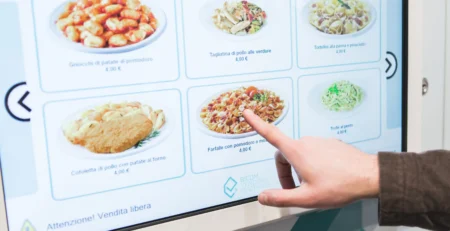
Intuitive user interfaces: High-resolution touchscreens, contactless payments, dedicated apps for advance ordering, and even voice recognition systems in some more advanced versions.
Italy, with its millennia-old culinary tradition, might seem the country least inclined to embrace this technological revolution. Instead, it’s becoming one of the most interesting and innovative markets for hot food vending machines. The reason is simple: Italians have never accepted compromises on food quality, not even when it comes to quick and convenient solutions.
The Italian Market: Tradition Meets Innovation
In Italy, the concept of “fast food” has always had to contend with extremely high quality standards. Italians are accustomed to long lunches, fresh ingredients, traditional preparations passed down through generations. How can a machine compete with this cultural heritage?
The answer lies in the approach: Italian hot food vending machines don’t try to replace tradition, but to democratize it. They make quality food accessible even when restaurants are closed, even in places where it wouldn’t be economically sustainable to open a traditional kitchen, even for those who only have a few minutes for lunch break.
The Italian company phenomenon: Many Italian companies are installing hot food vending machines in their offices and factories. It’s not just a convenience for employees, but a true corporate welfare strategy. A plate of pasta with tomato sauce prepared on the spot costs much less than a meal voucher but offers a superior gastronomic experience compared to classic packaged sandwiches.
Universities and hospitals: Environments where people spend many consecutive hours are rapidly adopting these technologies. A student can enjoy a fresh margherita pizza at 2 AM in the university library, a doctor can have a hot meal during a break between shifts. The democratization of quality food becomes a social issue.
Stations and airports: Italian travelers, notoriously demanding about food, are discovering they can eat a proper plate of pasta even in a train station in Bergamo or at Malpensa airport. No more stale sandwiches sold at exorbitant prices, but real meals prepared on the spot.
Italian Excellence: The Case of Mida by Bicom Vending
In the Italian landscape of hot food vending machines, some companies stand out for their innovative approach and attention to quality. Among these, the Mida solutions by Bicom Vending represent a perfect example of how technology can marry Italian culinary excellence.
Product philosophy: Mida machines are not simple automatic dispensers, but true “intelligent kitchens” designed to respect the quality standards that the Italian palate demands. Every aspect, from ingredient selection to serving temperature, is designed to offer a gastronomic experience that doesn’t feel the weight of automation.
Cutting-edge technology: Mida systems integrate the most advanced cooking and preservation technologies. The built-in ovens use combined technologies that allow results comparable to those of a professional kitchen. Pasta is cooked al dente, pizza has a crispy crust and soft interior, main courses maintain the right consistency.
Menu variety: One of the main challenges of hot food vending machines is offering variety without compromising quality. Mida manages to propose menus that change during the week, with dishes ranging from Italian tradition to international influences. Risottos, lasagna, cutlets, but also more innovative proposals that intercept contemporary tastes.
Quality control: Each Mida machine is equipped with monitoring systems that constantly verify ingredient freshness, storage temperature, and cooking times. A network of sensors ensures that every dish served meets quality and food safety standards.
User experience: The Mida interface is designed to make the purchasing experience intuitive and pleasant. High-resolution photos of dishes, detailed ingredient descriptions, estimated preparation times, ability to customize some aspects of the dish. It’s no longer about pressing a button and hoping for the best, but making a conscious and informed choice.
The Science of Automated Food: How Modern Hot Food Vending Machines Work
Behind the apparent simplicity of inserting a coin (or tapping a card) and receiving a hot dish lies fascinating technological complexity. Every modern hot food vending machine is an integrated ecosystem of sensors, processors, cooking systems, and precision mechanisms working in perfect synchrony.
The storage system: Ingredients are stocked in separate compartments, each maintained at optimal temperature. Proteins are stored in refrigerated environments between 0 and 4 degrees, vegetables in systems controlling humidity and atmosphere, carbohydrates in airtight containers preserving their freshness and nutritional properties. Constantly active sensors monitor these parameters, automatically discarding any ingredient exceeding safety thresholds.
The assembly process: When a user places an order, the machine initiates a precise sequence of operations. Robotic arms retrieve necessary ingredients, dose them according to preset recipes (but often customizable), combine them in specific cooking containers. The precision is millimetric: each portion is weighed and calibrated to ensure consistency in taste and nutritional value.
Cooking: Here’s where the magic happens. Modern cooking systems use multiple technologies: microwaves for rapid and uniform heating, electric grills for browning and adding texture, steam to maintain food moisture, forced hot air to obtain crispy crusts. Everything is controlled by algorithms regulating temperature, time, and intensity based on dish type and ingredients used.
Quality control: Throughout the process, sensors verify that every parameter remains within optimal values. Infrared thermometers check cooking temperature, high-resolution cameras verify dish appearance, precision scales ensure final weight is correct. If something doesn’t go as planned, the system automatically discards the product and restarts the process.
Presentation: The finished dish is packaged in containers designed to maintain optimal temperature and presentation. Some systems also include automatic decorative elements: a sprinkle of parmesan, a drizzle of oil, a sprig of basil. Details that make the difference between an industrial meal and a gastronomic experience.
The Numbers of a Revolution: The Global Hot Food Vending Machine Market
Global hot food vending machine market data tells the story of explosive growth showing no signs of slowing. In 2023, the global market value exceeded $3.2 billion, with forecasts indicating a compound annual growth rate of 8.7% through 2030.
Asian leadership: Japan remains the most mature market, with over 5.5 million vending machines installed (one for every 25 inhabitants), of which about 15% are hot food machines. South Korea follows with similar density, while China is recording the fastest growth, with installations increasing 20% year over year.
Growing Europe: The European market, traditionally more conservative, is accelerating rapidly. The UK leads with over 50,000 hot food vending machines installed, followed by Germany (35,000) and France (28,000). Italy, despite starting later, shows the highest growth rate: +45% in 2023 compared to the previous year.
Market segments: 38% of hot food vending machines are installed in work environments (offices, factories, hospitals), 22% in educational facilities (universities, schools), 18% in transit locations (stations, airports), 12% in residential spaces (condominiums, student housing), and 10% in public spaces (shopping centers, parks).
Economic impact: Each hot food vending machine generates an average of €1,200-2,500 in monthly revenue, with margins varying from 45% to 65% depending on product types offered and location. Machines installed in high-traffic environments can exceed €4,000 in monthly turnover.
Social Impact: Democratization of Quality Food
Hot food vending machines are not just a commercial phenomenon but are generating significant social impact. They’re democratizing access to quality food, breaking geographical, temporal, and economic barriers that traditionally limited the availability of nutritious and tasty meals.
Geographic accessibility: In many peripheral or rural areas, where it wouldn’t be economically sustainable to open a restaurant or cafeteria, hot food vending machines offer the only opportunity to consume a hot, quality meal. Provincial hospitals, industrial plants in isolated areas, universities in small towns: places where the only alternative before was bringing food from home or settling for industrial snacks.
Temporal accessibility: The 24/7 availability of hot food vending machines is changing the eating habits of millions of people. Night shift workers, students studying late, travelers with unusual schedules: all can now access hot meals at any time, without being bound by restaurant opening hours.
Economic accessibility: A hot meal from a hot food vending machine costs on average 30-40% less than the same dish served in a restaurant. This price difference makes quality meals accessible even to those with limited budgets: students, retirees, low-income workers.
Social inclusion: Hot food vending machines are also breaking down social barriers. People with physical disabilities who have difficulty frequenting traditional restaurants, individuals with social anxiety who prefer to avoid interactions with service staff, elderly people who have difficulty cooking at home: all can autonomously and discreetly access nutritious meals.
Nutritional impact: Contrary to prejudices, many modern hot food vending machines offer more balanced food options compared to traditional fast food. Menus designed by nutritionists, fresh ingredients, controlled portions, detailed nutritional information: everything contributes to more conscious and healthy eating.
Environmental Sustainability: A Technological Paradox
One of the most debated issues regarding hot food vending machines is their environmental impact. On one hand, the automation and energy efficiency of these machines can significantly reduce food waste and resource consumption. On the other, the production, transport, and disposal of these complex systems raise legitimate environmental concerns.
Reduction of food waste: A hot food vending machine prepares food only on order, almost completely eliminating the waste characterizing traditional restaurants. An average restaurant discards 15-20% of prepared food, while a vending machine discards less than 2%. Multiplied by thousands of machines, the impact is significant.
Energy efficiency: Modern hot food vending machines use highly energy-efficient heating and refrigeration systems. A machine consumes an average of 8-12 kWh per day, equivalent to the consumption of a large household refrigerator. Considering it can serve 50-100 meals per day, the energy impact per meal is very low.
Sustainable packaging: Many companies are investing in biodegradable or compostable packaging. Bamboo fiber containers, utensils made from plant materials, recycled paper napkins: small details that, multiplied by millions of meals served, make a difference.
Optimized logistics: A single hot food vending machine can replace three or four traditional food service points, drastically reducing the transport needed for restocking. Additionally, many machines use local ingredients, further reducing the logistics footprint.
Circular economy: Some companies are implementing circular economy systems, using organic waste to produce compost or biogas, recovering packaging materials for recycling, reusing components from obsolete machines for producing new models.
Challenges and Criticalities: The Limits of Mechanical Perfection
Despite technological progress and market enthusiasm, hot food vending machines must still overcome several significant challenges to achieve widespread distribution and universal acceptance.
Maintenance complexity: A hot food vending machine is infinitely more complex than a traditional beverage dispenser. Refrigeration system, ovens, robotic arms, sensors, software: each component can break down, and when it does, the machine becomes unusable. Maintenance requires specialized technicians and costs that can reach 15-20% of annual revenue.
Quality perception: Despite technological advances, many consumers maintain skepticism toward “automated food.” The perception that a machine can never match the quality of human preparation remains widespread, especially in countries with strong culinary tradition like Italy.
Menu limitations: However sophisticated, hot food vending machines have physical limitations preventing replication of the entire spectrum of human cuisine. Dishes requiring complex cooking techniques, variable timing, or particularly perishable ingredients remain difficult to automate.
Installation costs: The initial investment for a quality hot food vending machine can reach €20,000-50,000, figures requiring consistent sales volumes to be amortized. This limits installation to locations with guaranteed traffic.
Regulation: Regulations for hot food vending machines vary significantly from country to country and are often not yet clear or complete. Health licensing issues, legal liability in case of food poisoning, safety standards: all aspects creating uncertainties for operators and investors.
The Near Future: Artificial Intelligence and Personalization
Tomorrow’s hot food vending machines will be profoundly different from today’s, thanks to the integration of emerging technologies promising to further revolutionize the sector.
Predictive artificial intelligence: AI systems will analyze consumption patterns, weather conditions, local events, individual habits to predict demand and optimize inventory and menus. An office machine will “learn” that more pizzas sell on Fridays, that soup requests increase when it rains, that Mario from the third floor always orders tomato pasta at 1:30 PM.
Extreme personalization: Biometric recognition, dedicated apps, order history: everything will contribute to creating personalized menus for each individual user. The machine will “remember” preferences, food intolerances, nutritional goals of each customer, automatically proposing the most suitable options.
Automated molecular cuisine: Molecular cuisine techniques, with their chemical and physical food transformations, lend themselves perfectly to automation. Machines capable of gelling, spherifying, freeze-drying could offer cutting-edge gastronomic experiences in automatic format.
IoT integration: Hot food vending machines will become nodes of an intelligent network, communicating with each other to optimize inventory and maintenance, sharing consumer taste data, coordinating promotions and marketing initiatives.
Blockchain and traceability: Every ingredient can be traced from production to consumption through blockchain technology, ensuring total transparency on origin, freshness, transformation processes. A QR code on packaging will allow access to the complete “biography” of the meal.
Case Studies: Successes and Failures in the Real World
The Japanese success of Acure: The JR East railway station chain has installed over 3,000 Acure hot food vending machines, serving 150,000 meals daily. The secret to success: menus changing every 4 hours, local ingredients, competitive prices (average €4 for complete meal). Result: 95% customer satisfaction, €2.3 average revenue per transaction.
The Berkeley university experiment: The University of California installed 50 hot food vending machines on campus, offering vegetarian and vegan meals at subsidized prices for students. After 18 months, results are mixed: high satisfaction for quality and price, but usage lower than expected (40% compared to forecasts). The cause: American students’ cultural resistance to “automated food.”
The Italian failure of Roma Termini: In 2019, Roma Termini station installed 15 hot food vending machines with “typically Italian” menus: pasta, pizza, supplì. After only 8 months, 12 machines were removed due to low usage. The problems: prices too high (€8-12 per meal), inconsistent quality, inadequate maintenance. Lesson learned: technology alone isn’t enough, a sustainable business model is needed.
The corporate triumph of Siemens Munich: Siemens Munich headquarters replaced three company cafeterias with 25 hot food vending machines distributed across all buildings. Result: 30% cost reduction, 85% employee satisfaction, 40% increase in time actually dedicated to work (elimination of cafeteria queues). The model is now replicated in 15 European sites of the group.
Impact on Workers: Automation vs Employment
One of the most delicate issues regarding the spread of hot food vending machines is the impact on restaurant industry employment. It’s undeniable that every machine replacing a traditional food service point eliminates some jobs: cooks, waiters, cashiers, cleaning staff.
However, reality is more complex than simple one-to-one replacement. Hot food vending machines also create new types of employment: specialized maintenance technicians, restocking and sanitation staff, software developers, menu designers, nutritionists, food logistics experts.
Professional retraining: Many sector companies are investing in retraining programs for restaurant workers. A waiter can become a maintenance technician, a cook can specialize in developing recipes for automated preparation, a bar manager can become a vending machine network operator.
New business models: The spread of hot food vending machines is creating opportunities for new business models. Small entrepreneurs can manage machine networks without the fixed costs of a premises, tech startups develop specialized software, agricultural companies specialize in supplying ingredients for food automation.
Sector evolution: Rather than completely replacing traditional restaurants, hot food vending machines are creating a new market segment. Restaurants increasingly focus on experience, sociability, culinary creativity, while automated machines cover the need for fast, economical, quality food.
Future Trends: Toward Food 4.0
Looking to the future, hot food vending machines represent only the beginning of a broader transformation we can call “Food 4.0.” A revolution that will integrate automation, artificial intelligence, environmental sustainability, and extreme personalization.
Food 3D printers: The first food 3D printers are already entering the market. Within 5-10 years, we could see hot food vending machines capable of “printing” customized dishes layer by layer, using ingredient cartridges in powder or paste form.
On-site cultivation: Hydroponic cultivation systems integrated into vending machines will allow production of herbs, sprouts, microgreens directly inside the machine, ensuring absolute freshness and reducing transport times to zero.
Advanced robotic cooking: Increasingly sophisticated robot chefs will be able to replicate gestures and techniques of human cooking: sautéing ingredients in a pan, hand kneading, decorating dishes with artistic precision.
Augmented reality: Users will be able to visualize dishes in augmented reality before ordering, visually customize ingredients and presentation, receive detailed nutritional information overlaid on the real dish.
Personalized medicine: Integration with wearable medical devices to automatically propose meals suited to user biometric parameters: blood sugar, blood pressure, stress level, physical activity performed.
Conclusions: The Democratization of Good Food
Hot food vending machines represent much more than a simple technological innovation in the restaurant sector. They’re the symbol of a profound transformation in how we conceive, produce, and consume food.
In an increasingly fast world, where time is a precious and scarce resource, these machines offer an elegant solution to the dilemma between convenience and quality. They no longer force consumers to choose between a fast but poor-quality meal or a quality meal that requires time and money.
The democratization of good food is perhaps the most revolutionary aspect of this technology. Making quality food accessible to everyone, everywhere and at any time, means breaking down social, economic, and geographical barriers that for centuries have divided those who could afford good food from those who had to settle for industrial alternatives.
Italy, with innovative companies like those developing Mida by Bicom Vending solutions, is demonstrating that it’s possible to combine culinary tradition and technological innovation, quality and automation, food culture and modern needs.
Challenges remain significant: high installation and maintenance costs, cultural skepticism, regulatory complexity, technological limitations. But the potential benefits are enormous: reduction of food waste, energy efficiency, accessibility of quality food, creation of new specialized jobs.
The future of hot food vending machines is not written. It will depend on the ability to overcome current challenges, continue innovating, respond to real consumer needs. But one thing is certain: they have already begun to change the global food landscape, and this change is only the beginning.
As we walk toward a future where technology permeates every aspect of our lives, hot food vending machines remind us that the most significant innovation is not the one that replaces humans, but the one that frees them from repetitive tasks to focus on what really matters: quality, creativity, experience, sociability.
Food will continue to be culture, tradition, pleasure, sharing. Machines will take care of logistics, precision, efficiency, availability. Together, human and machine, they are writing a new chapter in the millennia-old history of human nutrition.
A story where a plate of pasta with tomato sauce can be enjoyed at midnight in a train station with the same quality you’d find in a family trattoria. A story where technology doesn’t dehumanize food but makes it more human, because it makes it accessible to everyone.
Welcome to the future of food. The future is already here, and it tastes like home.